Uncoiler: The Entry System That Decides Tube Mill Uptime
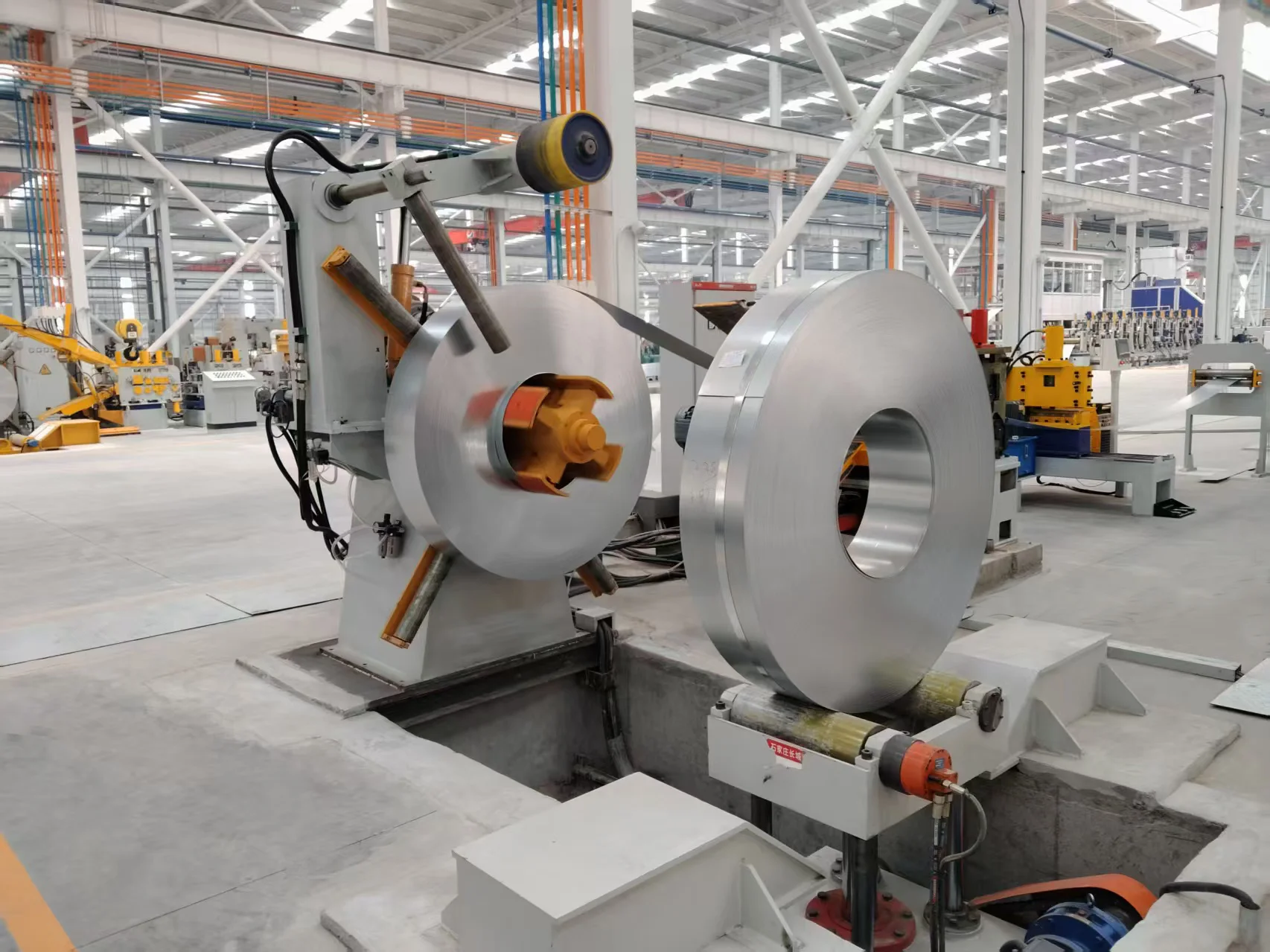
An un coiler, usually written uncoiler, is the first machine in the tube mill and the first place a production problem appears. If the mandrel slips, the coil telescopes, or the strip loses tension, the mill stops before the first weld. The forming and welding sections get the attention; the entry side decides whether they run.
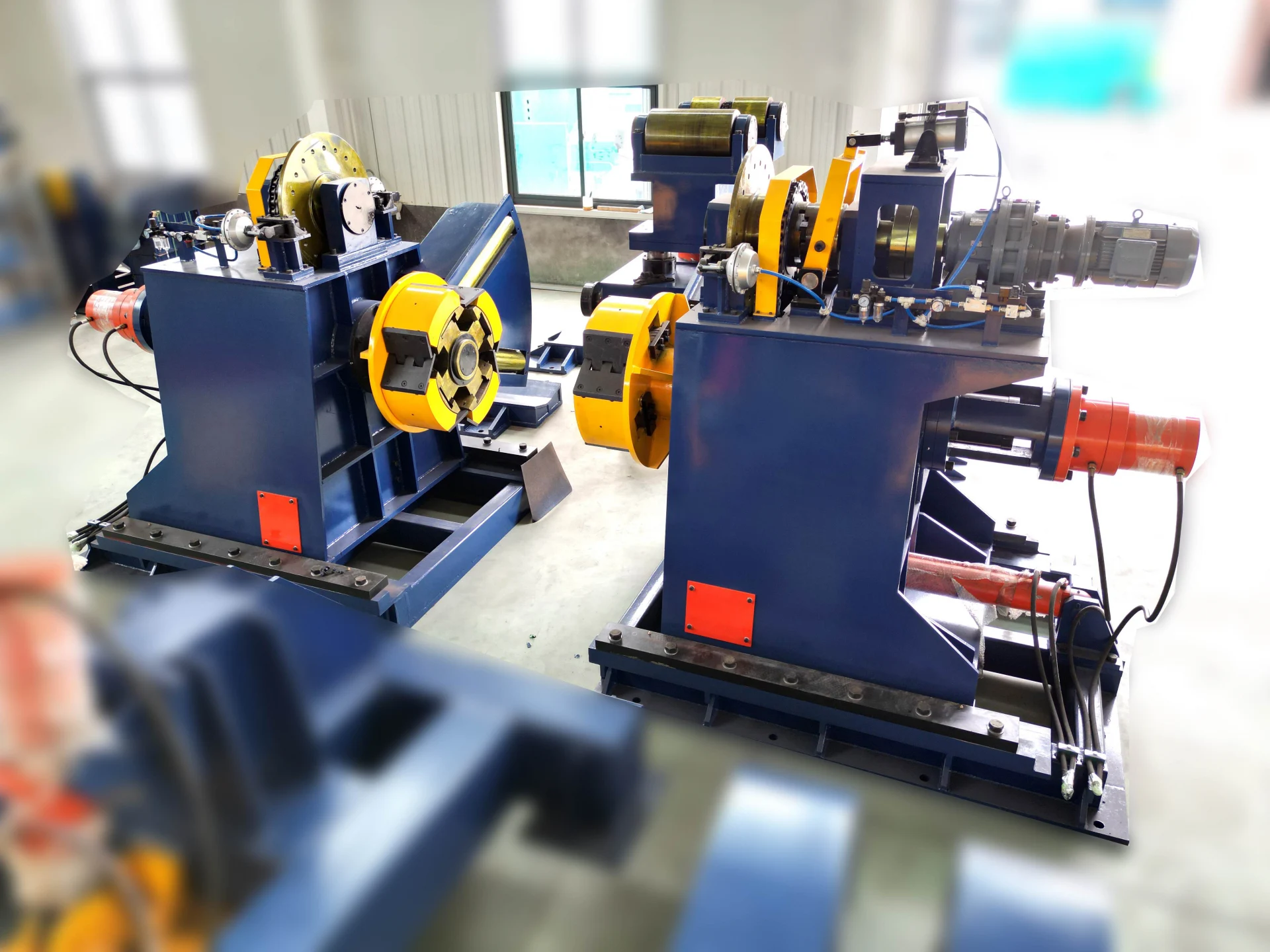
The uncoiler has to hold a heavy coil concentrically, pay off strip at line speed, and keep tension stable as the coil diameter changes. SANSO builds hydraulic, double-head, manual, motorized, and 3-in-1 decoiler systems for tube mills and coil processing lines. If the entry side is limiting uptime, send the coil data and line speed to our team before you replace the whole line.
Why the Un Coiler Decides Uptime
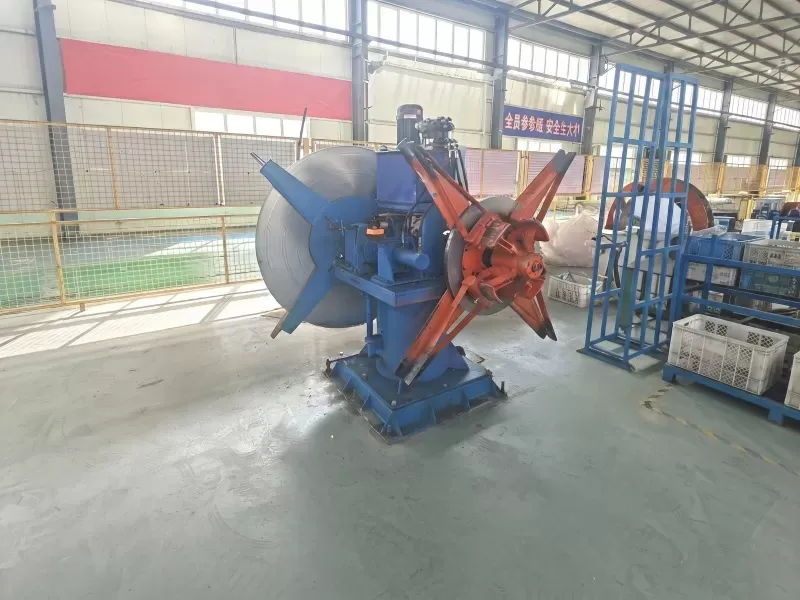
The uncoiler is a tension and storage device, not just a spool. It has to match the coil weight, the strip width, the line speed, and the acceleration of the mill. A mismatch shows up downstream as edge wander, weld defects, or a mill stop.
The entry side also sets the changeover time. A single-head uncoiler needs the line to stop while the next coil is loaded. A double-head design can pre-load the next coil and rotate it into position. The difference is measured in minutes per coil, and those minutes add up over a shift.
The Six Entry-Side Failures
1. The mandrel slips or does not expand evenly
A worn or poorly expanded mandrel lets the coil rotate on the shaft. The strip may slip, scratch, or feed in an inconsistent loop. On a hydraulic uncoiler, the expansion pressure and the segment condition matter.
Check the mandrel range against the coil ID. A 480–530 mm mandrel cannot hold a 610 mm coil without the right segment set. Look for wear on the wedge segments, hydraulic pressure loss, and uneven expansion.
2. The coil clocksprings when the straps are cut
A tightly wound coil stores energy. When the strapping is cut, the outer wraps can spring outward. That is a safety event and a quality event: the coil can telescope, the strip edge can be damaged, and the operator can be exposed.
A hold-down snubber arm with a polyurethane roller keeps the wraps under control during strapping removal. The operator procedure matters too. Confirm the snubber is engaged before the strap is cut, not after.
3. Tension is lost as the coil pays off
The coil diameter shrinks as the line runs. If the brake or drive does not compensate, the strip goes slack. Loose wraps create edge wander, poor weld alignment, and a loop that surges into the mill.
Check the back-tension system: a pneumatic disc brake, a hydraulic brake, or a regenerative VFD drive. The control should follow the line speed and the coil diameter, not hold one fixed torque.
4. Coil loading is the bottleneck
A 10-ton coil is not loaded by hand. The crane, the coil car, the mandrel height, and the floor space all affect the loading time. If the coil car is missing, the crane has to position the coil on the mandrel, which is slower and less precise.
An optional hydraulic coil car with a V-cradle lifts and centers the coil. It reduces the number of operators and the risk of a damaged coil. It also shortens the time between coils, which is where the uptime gain is.
5. Changeover takes too long
A single-head uncoiler is simple and cost-effective for low-volume lines. A double-head uncoiler with a 180-degree rotating turret lets the operator load the next coil while the current coil runs. The mill can continue without a full stop.
The trade-off is footprint and cost. A double-head machine needs more floor space and a second mandrel. For a high-speed line running many coils per shift, the changeover saving usually pays for the extra hardware.
6. The loop control fights the mill
The uncoiler and the mill have to agree on the strip loop. If the loop sensor, the VFD, and the accumulator are not synchronized, the strip alternates between tight and slack. The welder sees a moving edge; the operator sees a stop.
Check the loop sensor position, the response time of the drive, and the acceleration ramp. A fast mill with a slow uncoiler will pull the strip tight on every start. A fast uncoiler with a slow mill will push slack into the entry.
Manual, Hydraulic, or Double Head?
| Type | Typical coil weight | Best for | Trade-off |
|---|---|---|---|
| Manual | 0.5–5 t | Low-volume lines and light coils | Operator effort and slower loading |
| Hydraulic | 5–25 t | Heavy coils and continuous tube mills | Higher cost, hydraulic maintenance |
| Double head | 2 × 3 t or 2 × 5 t | Fast changeover and high coil count | Larger footprint and higher cost |
| 3-in-1 feeder | 3–10 t | Compact coil, straighten, and feed lines | Limited coil width and heavier strip |
A SANSO Example
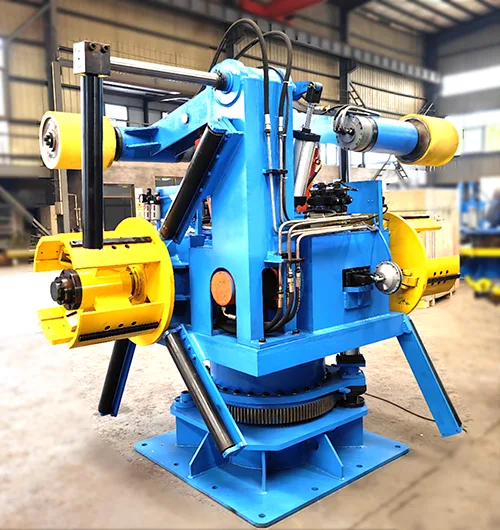
The hydraulic decoiler range covers 5–25 ton coils, strip thickness 0.5–12 mm, coil width 150–1,650 mm, and line speeds up to 130 m/min. The mandrel is a four-segment concentric wedge design with hydraulic expansion, and the machine can include a hold-down snubber arm, hydraulic or pneumatic back-tension brake, and a hydraulic coil car.
The double-head uncoiler uses a 180-degree rotating dual mandrel for pre-loading the next coil. The manual range covers 0.5–5 tons for lighter lines. The 3-in-1 decoiler straightener feeder handles 0.3–6.0 mm strip up to 1,300 mm wide, with a 3–10 ton coil capacity and servo feed.
The company was founded in 2001 and machines about 90% of its mill components in-house. The company lists 300+ global pipe mill installations and pre-shipment cold commissioning. Those are useful supplier signals, but the uncoiler still has to match the coil, the line speed, and the changeover plan.
Common Mistakes
- Buying by coil weight alone: strip width, thickness, and line speed also decide the drive and brake.
- Ignoring the coil ID: the mandrel range has to cover the actual coil bore.
- No snubber arm: cutting the straps without hold-down is a safety risk.
- Single-head on a high coil count: changeover time becomes the bottleneck.
- No coil car: crane loading is slower and less repeatable.
- Fixed brake torque: the tension changes as the coil diameter shrinks.
The Coil-Loading Stopwatch
Before you change the uncoiler, time the entry side. Use a stopwatch and four timestamps:
- Coil ready: the coil is on the floor or in the coil car.
- Mandrel clamped: the coil is centered and expanded.
- Strip threaded: the strip reaches the pinch rolls or accumulator.
- First good weld: the mill is running at the target speed.
The gap between timestamps shows where the delay lives. If the coil is ready but the mandrel is not clamped, the loading method is the problem. If the strip is threaded but the first weld is delayed, the loop control or the mill start sequence is the problem.
Repeat the stopwatch for five coils. A double-head uncoiler should cut the time between coil 1 and coil 2, not just the loading time. If the line still stops for every coil, the changeover is not solved.
Send the team the coil weight, coil ID and OD, strip width and thickness, line speed, changeover target, and available floor space. The team can recommend a hydraulic, double-head, manual, or 3-in-1 entry system.
Use the SANSO contact page or email info@tubemillsupplier.com. For the product details, see the uncoiler and decoiler range and the hydraulic decoiler page.
Frequently Asked Questions
Q1: What is an un coiler?
A1: An un coiler, also called a decoiler, holds a steel coil and pays off strip into a tube mill or coil processing line. The term is sometimes written as two words, un coiler, but it refers to the same machine. It expands a mandrel inside the coil, controls back tension, and feeds the strip at the line speed.
Q2: When should a line move from manual to hydraulic uncoiling?
A2: Move to hydraulic when coils exceed about 3 tons, strip thickness exceeds about 2.5 mm, or the line needs consistent tension at higher speed. A hydraulic mandrel and snubber arm also improve operator safety during strap removal.
Q3: Why does the coil telescope when the straps are cut?
A3: A tightly wound coil stores energy in the outer wraps. If the hold-down arm is not engaged, the wraps can spring outward and the coil can telescope. Use a snubber arm and a written strapping procedure.
Q4: When is a double-head uncoiler worth the extra cost?
A4: When the line runs many coils per shift and the changeover stops production. A 180-degree double-head design lets the operator pre-load the next coil while the current coil runs. The saving is in minutes per coil, not in the machine price.
Q5: What data does the factory need for an uncoiler quote?
A5: Provide the coil weight, ID and OD, strip width and thickness, steel grade, line speed, changeover target, floor space, and whether a coil car or double-head configuration is required. Add the existing line layout if available.
Sources
- ISO 12100:2010, safety of machinery — general principles for design, risk assessment, and risk reduction.
- ISO 9001, quality management systems.
Reviewed by Liu Lei — Chief Technical Advisor (25 Years Experience)
Verified by Chief Technical Advisor Liu Lei and Hebei SANSO's 25-engineer R&D team (founded in 2001) using German COPRA RF roll pass simulation and 300+ global steel pipe mill commissioning records.