Magnetic Separator vs. Paper Band Coolant Filter Systems for ERW Tube Mills: Sizing & ROI
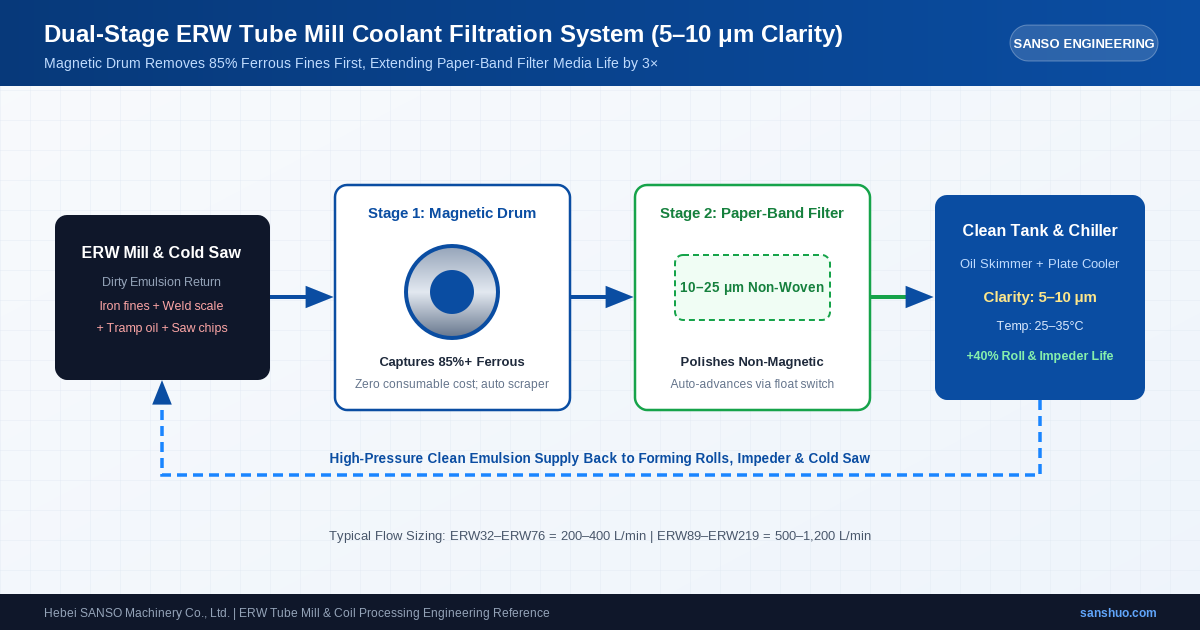
Quick Answer: The highest-ROI coolant filter system for an ERW tube mill is a dual-stage combination unit: a high-gauss rare-earth magnetic separator drum removes 85%–90% of ferrous scale and iron fines first with zero media cost, followed by a gravity or vacuum paper-band coolant filtration machine that polishes remaining non-magnetic fines down to 5–10 μm clarity—extending forming roll life by 35%–45% and tripling emulsion sump life.
Why Unfiltered Mill Coolant Quietly Destroys Rolls & Impeders
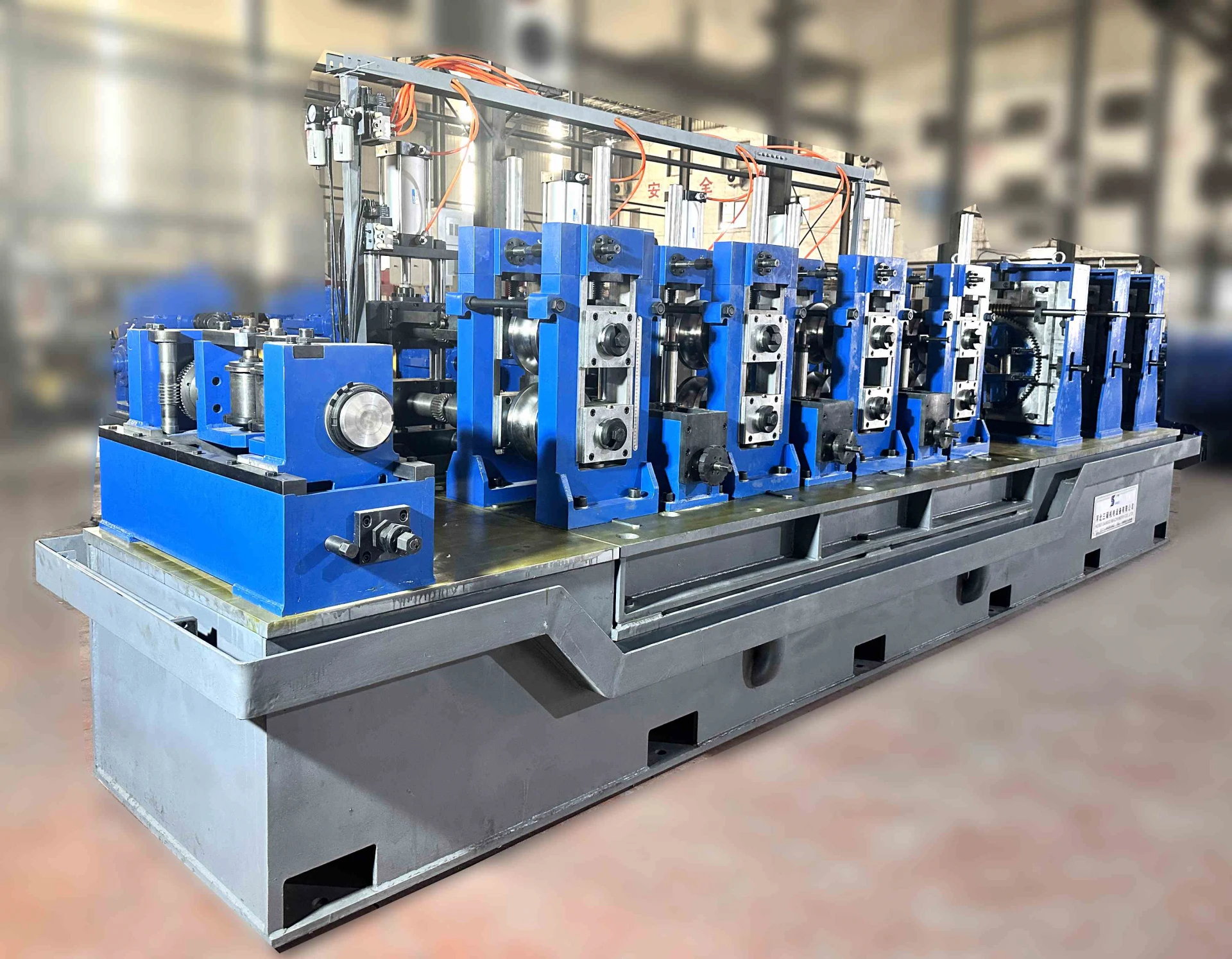
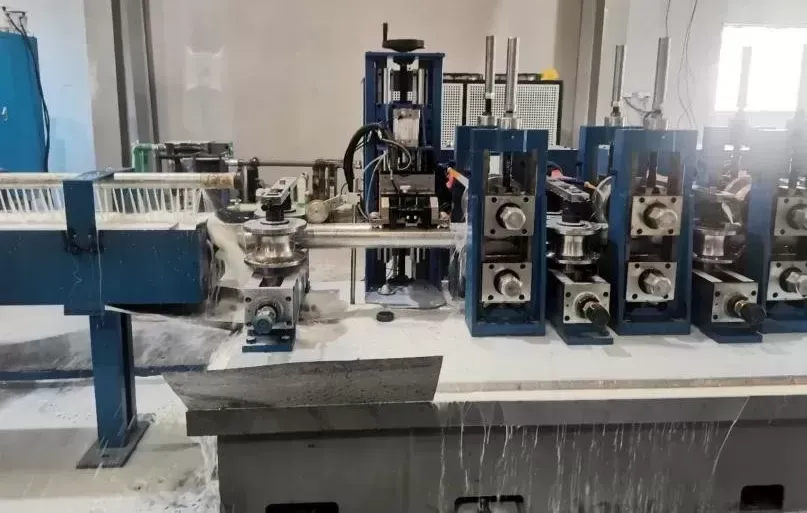
Every minute an ERW tube mill runs, hot-rolled mill scale, microscopic iron wear particles, scarfed weld chips, and hydraulic tramp oil wash directly into the emulsion return trough. Relying solely on a simple settling tank lets abrasive 10–50 μm iron fines recirculate nonstop across your precision Cr12MoV forming rolls and straight through your high-frequency impeder.
The financial damage compounds rapidly: abrasive slurry acts like liquid grinding paste on tube mill rolls (forcing premature re-grooving), clogs cooling nozzles, magnetically cakes onto the ferrite rod core inside the impeder, and triggers anaerobic bacteria growth that turns the sump sour and corrodes freshly welded pipe.
Magnetic Separator vs. Paper Band vs. Dual-Stage Coolant Filtration Machine
| Engineering Metric | Magnetic Separator Alone | Paper-Band Filter Alone | Dual-Stage Magnetic + Paper-Band |
|---|---|---|---|
| Filtration Precision | 40 – 80 μm (ferrous only) | 15 – 30 μm (all solids) | 5 – 15 μm (ferrous + non-ferrous) |
| Non-Magnetic Scale / Dust | Passes straight through | Captured cleanly | Captured cleanly |
| Filter Paper Consumption | Zero consumables | High (iron sludge blinds paper fast) | 65%–75% lower paper usage |
| Impeder & Nozzle Protection | Moderate (scale still clogs) | Good (high media cost) | Excellent (longest ferrite & roll life) |
| Best ERW Application | Pre-stage roughing only | Non-ferrous / stainless cold saws | All carbon & GI ERW tube mills |
Flow-Rate & Sump Tank Sizing Chart for ERW Tube Mills
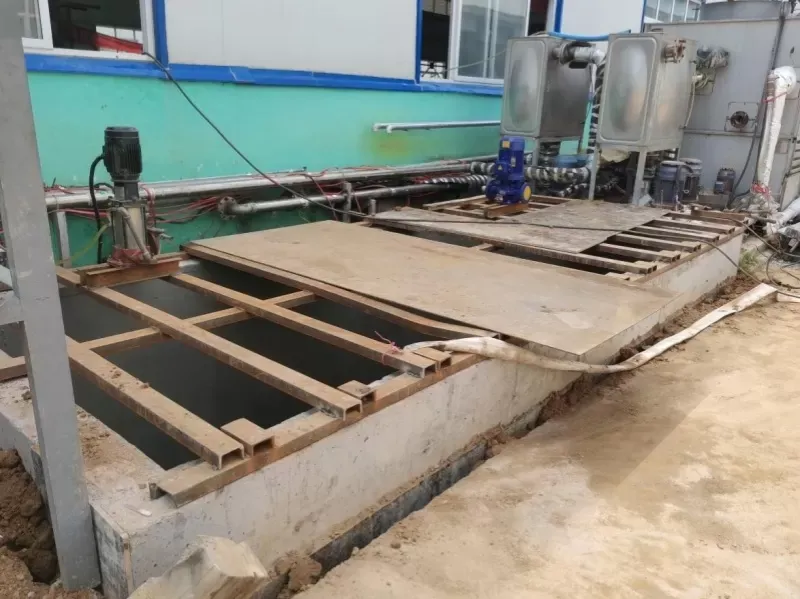
Undersizing a coolant filtration machine forces dirty emulsion to overflow the weir bypass straight into the clean tank. Size filtration capacity to 1.25× total pump flow with a tank retention time of at least 6–8 minutes so foam dissipates cleanly:
| Tube Mill Model | Recommended Filtration Flow | Clean + Dirty Tank Volume | Magnetic Drum Gauss | Recommended Paper Grade |
|---|---|---|---|---|
| ERW25 – ERW50 | 200 – 350 L/min | 2.0 – 3.5 m³ | ≥ 3,500 Gs (Rare Earth) | 30–40 g/m² non-woven |
| ERW76 – ERW114 | 400 – 650 L/min | 4.0 – 6.5 m³ | ≥ 4,000 Gs (Neodymium) | 40–50 g/m² non-woven |
| ERW165 – ERW219 | 700 – 1,000 L/min | 7.0 – 10.0 m³ | ≥ 4,500 Gs (Dual Drum) | 50–60 g/m² vacuum-assist |
| ERW273 – ERW426 | 1,200 – 1,800 L/min | 12.0 – 18.0 m³ | ≥ 4,500 Gs (Heavy Dual) | Vacuum drum / Hydrocyclone |
Tramp Oil & Temperature Control: The Forgotten Half of Coolant Management
- Belt / Coalescing Oil Skimmer: Hydraulic and gearbox leaks form an oxygen-blocking slick on top of the tank that breeds foul-smelling bacteria and causes smoking at the HF weld box. Skim tramp oil continuously during idle shifts.
- Plate Heat Exchanger: Keep emulsion supply temperature strictly between 25°C and 35°C—hot coolant loses lubricity, accelerates emulsion splitting, and risks pushing your ferrite impeder past its Curie temperature.
- Refractometer Concentration Check: Log Brix concentration daily (4%–6% for standard ERW forming; 8%–10% for separate HSS cold saw sumps) and keep pH between 8.8 and 9.4.
ROI Calculation: Payback in Under 7 Months
On a typical two-shift ERW76 tube mill, upgrading from a passive settling tank to a SANSO 500 L/min magnetic + paper-band coolant filter system saves approximately $18,000–$28,000/year across reduced emulsion disposal/makeup (3× longer sump life), 40% fewer roll regrinds, and 50% fewer impeder burnouts—delivering full capital payback in 5 to 7 months.
Worked Sizing Calculation: Pump Flow, Sump Volume & Plate Heat Exchanger
Sizing an ERW coolant filter system strictly by nominal pipe diameter leads to chronic foaming, high emulsion temperature (>42°C), and overflow bypass. Follow hydraulic cleanliness engineering principles (ISO 4406) and thermodynamic heat-load math to size every tank, filter, and heat exchanger accurately:
Step-by-Step Worked Example: ERW89 Tube Mill (300 kW Solid State HF Welder)
- Step 1 — Sum Active Coolant Consumers: Forming & sizing stands (18 stands × 12 L/min = 216 L/min) + weld squeeze box & spray trough (140 L/min) + through-flow impeder circuit (45 L/min) = 401 L/min active demand.
- Step 2 — Apply 1.25× Filter Margin:
401 × 1.25 = 501 L/min→ specify a 500–600 L/min dual-stage magnetic + paper-band filtration skid so dirty return liquid never overflows the weir even when filter cake builds up. - Step 3 — Size Sump Tank Retention Volume: To release entrained air bubbles and let tramp oil float cleanly to the belt skimmer, maintain 8 to 10 minutes retention time:
500 L/min × 9 min = 4,500 Liters (4.5 m³)split into a 1.5 m³ dirty settling bay and a 3.0 m³ clean supply bay. - Step 4 — Size Plate Heat Exchanger Capacity: Roughly 25%–30% of HF welding + mechanical forming heat (~80–90 kW thermal load) transfers into the mill emulsion. Specify a 100 kW brazed or gasketed stainless-steel plate heat exchanger fed by a 25°C cooling tower loop to hold clean emulsion supply strictly at 28°C–32°C.
Emulsion Chemistry & Microbiology Troubleshooting Matrix
Mechanical filtration removes solids, but chemical discipline keeps the metalworking fluid healthy under OSHA metalworking fluid safety guidelines:
| Coolant / Mill Symptom | Root Physical or Chemical Cause | Diagnostic Measurement | Immediate Corrective Action |
|---|---|---|---|
| Rotten-egg odor after weekend shutdown | Anaerobic sulfate-reducing bacteria thriving under floating tramp oil layer | pH drops below 8.5; dip-slide bacteria > 10&sup5; CFU/mL | Run belt oil skimmer continuously, add weekend air sparger, dose approved biocide |
| Excessive foam overflowing mill trough | Soft water (<50 ppm CaCO&sub3;), pump suction air leak, or tank retention <5 min | Check makeup water hardness and pump suction flange vacuum | Tighten suction seals, add silicone-free defoamer sparingly, keep tank level ≥85% |
| Flash rust on freshly cut carbon steel tubes | Emulsion concentration diluted below 3.5% or high chloride water (>100 ppm) | Check handheld optical refractometer (Brix × fluid factor) | Top up concentrate to 5%–6% via proportioning Venturi mixer (never dump raw concentrate) |
| Rapid filter paper roll consumption (>1 roll/week) | Magnetic drum scraper worn or drum gap too wide (>8 mm) | Inspect discharge cake—heavy black iron mud on paper fleece | Reset rubber squeeze roller pressure and adjust rare-earth drum baffle gap to 4–5 mm |
| Sticky brown varnish on forming rolls | Emulsion splitting from high sump temperature (>42°C) or incompatible hydraulic oil | Check clean-tank temperature and free tramp-oil percentage | Clean plate heat exchanger fouling and repair leaking hydraulic cylinder seals |
Plant Commissioning & Daily Coolant QA Checklist
- Daily Shift Start: Log clean-tank temperature (25–35°C), refractometer concentration (4.5%–6.0%), and pH (8.8–9.4) before starting the main ERW mill motor.
- Weekly: Empty the magnetic separator sludge bin, inspect rubber squeeze roll wear, and verify coalescing oil skimmer belt tracks cleanly without slipping.
- Monthly: Test clean-side gravimetric solids (target < 25 mg/L) and inspect impeder secondary 10 μm polishing bag filter differential pressure.
- Annually: Drain, steam-clean, and sanitize the entire 4–10 m³ tank with system cleaner during annual shutdown before charging fresh semi-synthetic emulsion.
- ISO — ISO 4406 Solid Particulate Cleanliness Coding for Industrial Fluids & Emulsions.
- ASTM International — ASTM E2523 Standard Terminology & Management Practices for Metalworking Fluids.
- U.S. OSHA — Metalworking Fluids Safety, Mist Control & Dermatitis Prevention Guidelines.
- SME (Society of Manufacturing Engineers) — Industrial Coolant Filtration & Tool Life Optimization.
- SANSO Filtration Equipment: Magnetic & Paper-Band Coolant Filtration Systems & Coolant Filtration & NDT Category.
Frequently Asked Questions (FAQs)
Why combine a magnetic separator with a paper-band coolant filter?
The magnetic drum strips out 85%+ of heavy ferromagnetic iron particles before the liquid touches the filter fleece, cutting paper-roll consumable cost by two-thirds while the paper band captures fine non-magnetic zinc dust, mill scale, and grinding grit.
What micron rating is recommended for ERW tube mill emulsion?
10 to 20 μm is ideal for main ERW forming and sizing stands, while a secondary 5 to 10 μm polishing bag or cartridge stage is recommended on the dedicated line feeding the HF impeder.
How often do I need to replace the filter paper roll?
With magnetic pre-separation upstream, a standard 100-meter roll of 40 g/m² non-woven filter media typically lasts 2 to 4 weeks on a single-shift ERW50–ERW89 mill, advancing automatically via float switch only when cake buildup raises liquid level.
Why does my ERW mill coolant smell bad on Monday mornings?
Floating hydraulic tramp oil seals the tank surface when pumps stop over the weekend, starving the water of oxygen and letting sulfate-reducing bacteria multiply. Running a weekend aeration sparger and belt oil skimmer eliminates Monday odor permanently.
Should the flying cold saw share the main ERW mill coolant tank?
For HSS cold saws, a dedicated 200–400 L auxiliary sump with 8%–10% higher-lubricity coolant is preferable so saw chips stay isolated and blades get richer extreme-pressure (EP) lubrication than the 4%–5% main mill emulsion.
Can SANSO supply a turnkey filtration skid sized for an existing pipe mill?
Yes. SANSO builds compact stainless-steel plug-and-play magnetic + paper-band filtration skids (100 to 2,000 L/min) complete with lift pumps, oil skimmers, plate heat exchangers, and PLC level controls.
What magnetic drum strength (Gauss) should I specify for an ERW tube mill separator?
Always specify rare-earth Neodymium (NdFeB) drums rated at 3,500 to 4,500 Gauss at the stainless shell surface—not cheap 1,200 Gauss ferrite drums, which let fine 10–30 μm paramagnetic mill scale slip straight onto the paper fleece.
Can SANSO customize a central coolant filtration system serving two or three ERW mills simultaneously?
Yes. For multi-mill pipe plants, SANSO engineers centralized 1,000–3,000 L/min gravity-return or lift-station filtration systems with redundant VFD supply pumps, dual vacuum paper-band filters, and automatic central concentrate proportioning.
Reviewed by Liu Lei — Chief Technical Advisor (25 Years Experience)
Verified by Chief Technical Advisor Liu Lei and Hebei SANSO's 25-engineer R&D team (founded in 2001) using German COPRA RF roll pass simulation and 300+ global steel pipe mill commissioning records.